Minor Hotels Group unified eight internationally recognised brands Anantara, Avani, Elewana Collection, NH Hotels, NH Collection, Tivoli, Oaks, and nhow under a single masterbrand and domain, bringing 560+ properties across six continents together.
It was a bold move. And it came with a real challenge: build awareness for a newly unified masterbrand while driving direct bookings and revenue in a highly competitive market.
The Approach
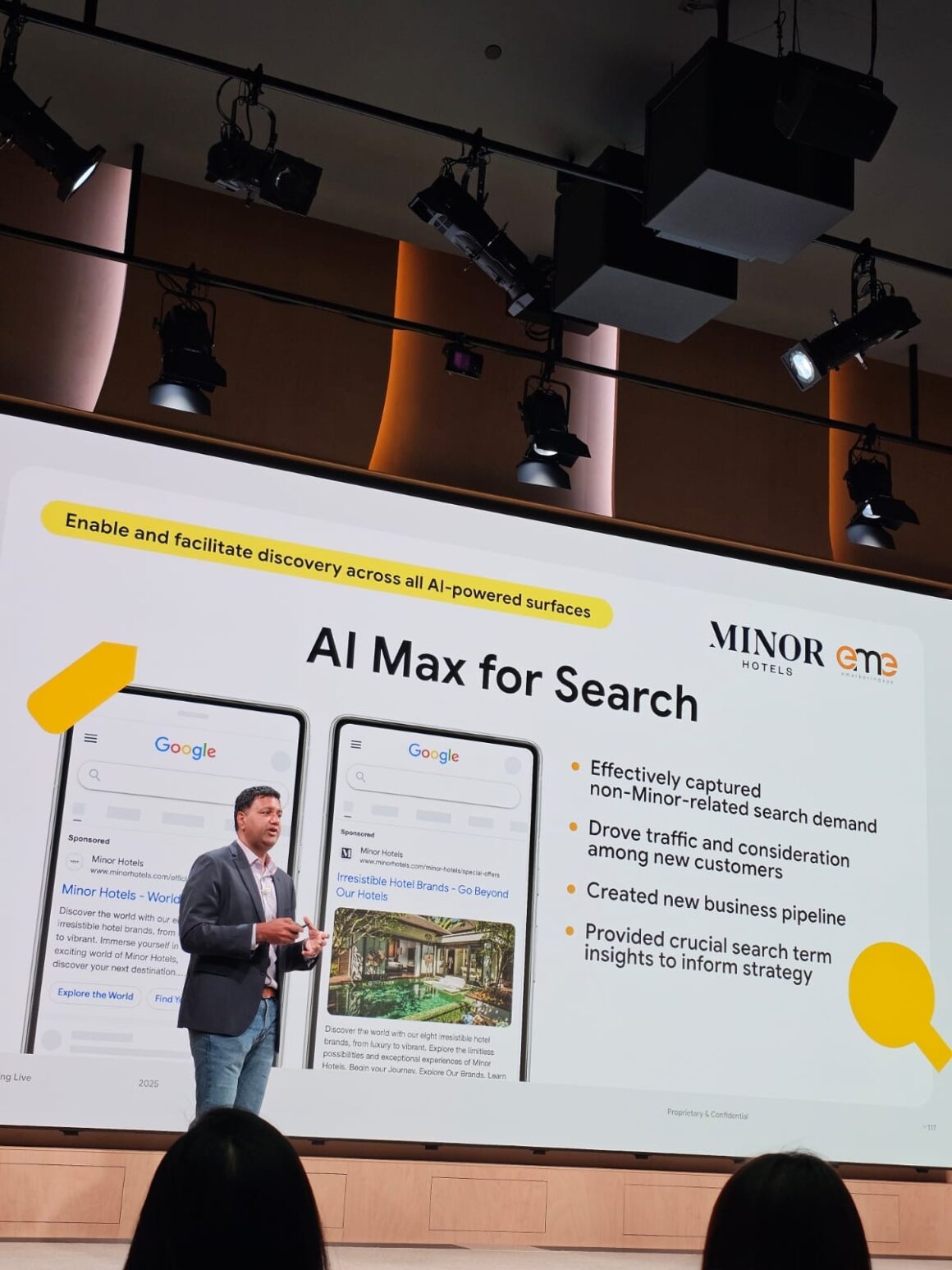
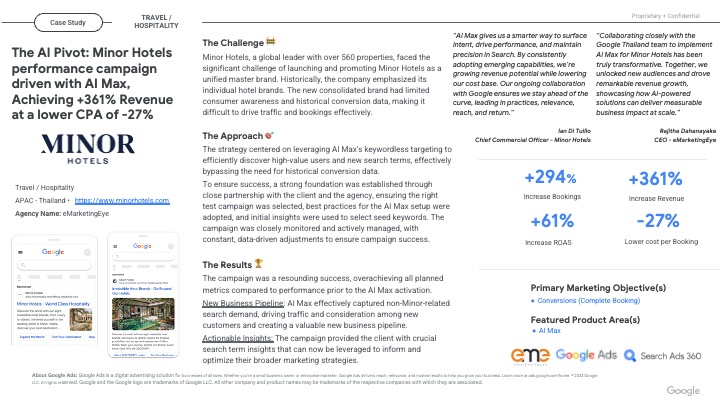
eMarketingEye partnered with Google Thailand to implement an AI powered search strategy using Google AI Max. Over six weeks, we led the strategic planning, setup, implementation, and ongoing optimisation of the campaign.
Rather than relying on a predefined keyword list, AI Max uses keywordless targeting to identify traveller intent signals in real time surfacing demand that traditional search targeting would have missed. For a masterbrand that was, in many ways, new to market, this was a significant advantage.
The Results
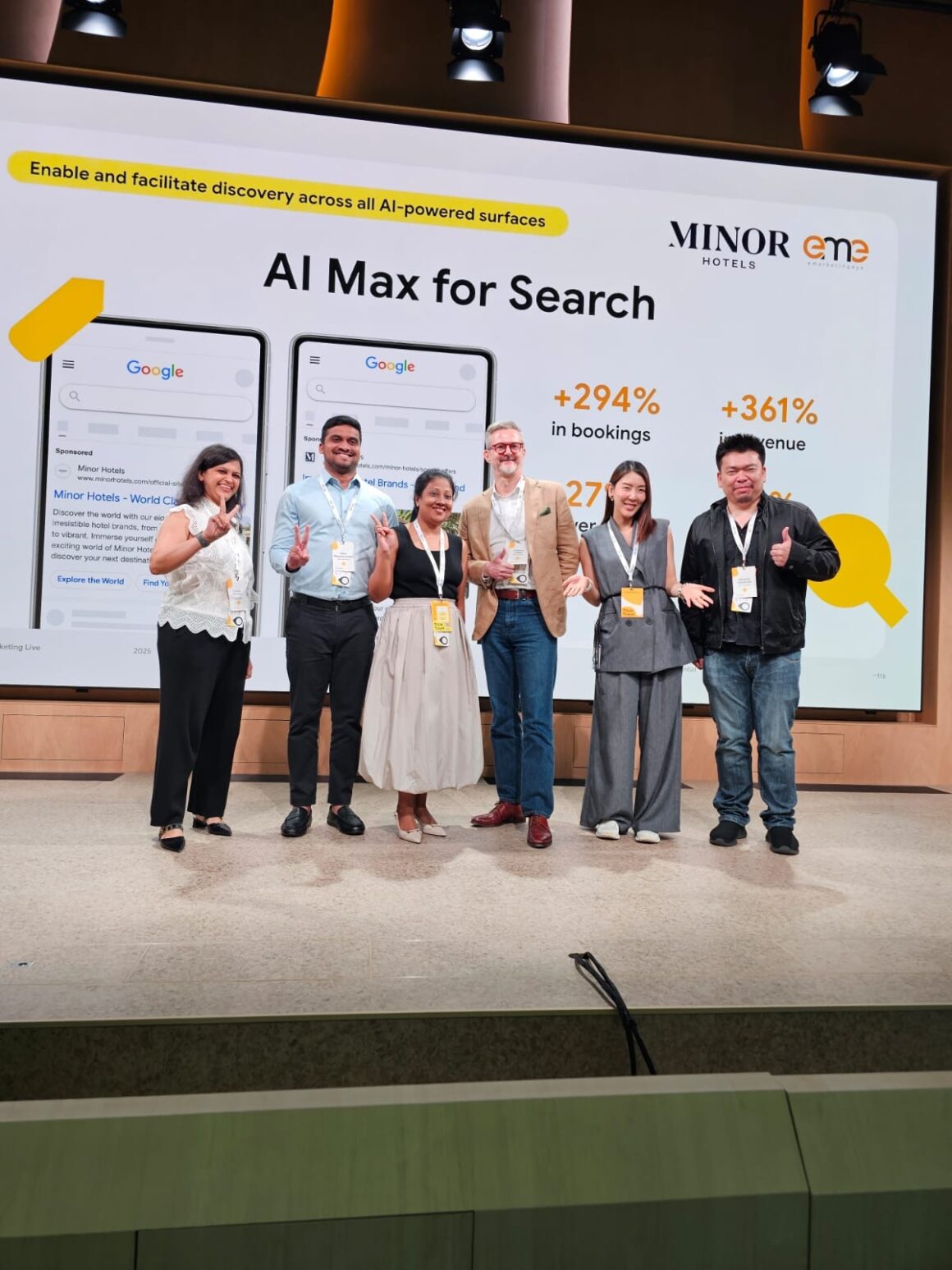
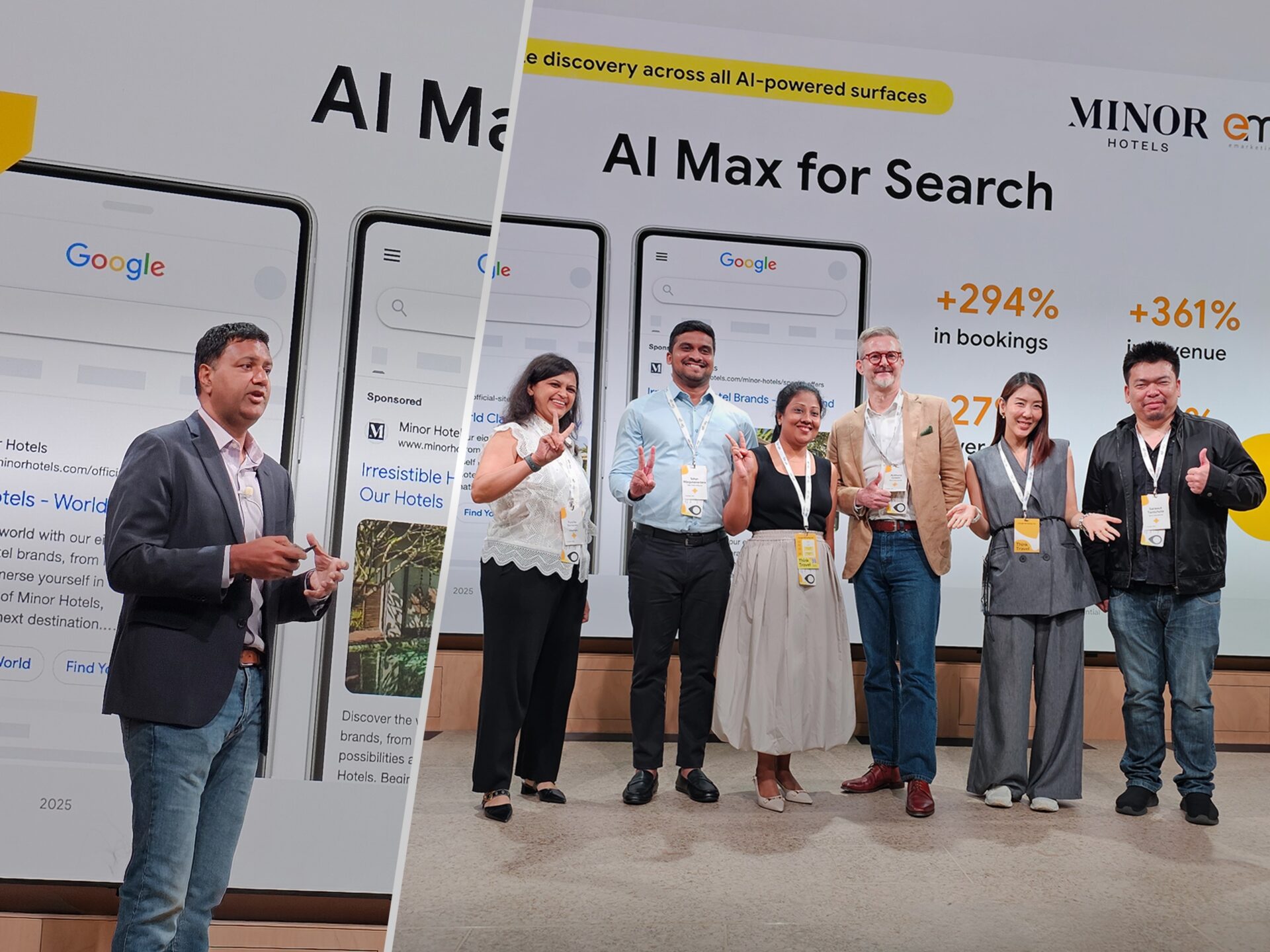
The campaign delivered impressive results across all key metrics: a +361% increase in revenue, a +294% increase in bookings, a +61% increase in ROAS, and a -27% reduction in cost per booking.
The performance was strong enough that Google selected to publish it as a case study, and the work was presented at Google Think Travel 2025, a notable achievement for a digital marketing agency, the first time AI Max had been implemented at hospitality scale by a digital marketing agency.
What It Signals
The Minor Hotels campaign is a clear indicator of where hotel paid search is heading. Keyword expertise still matters, but AI driven targeting is changing what’s possible particularly for brands navigating consolidation, new launches, or the need to grow direct revenue more efficiently.
Reaching the right traveller at the right moment is no longer just a keyword problem. It’s an intent problem. And that requires a different kind of strategy.
Interested in what an AI powered search strategy could look like for your hotel group? Get in touch with eMarketingEye.